



Digital Marketing Strategies for Software Companies
Digital marketing has become essential for software companies seeking to reach target audiences, generate qualified leads, and build lasting customer relationships. Unlike traditional marketing, digital channels offer unprecedented targeting precision, measurable results, and cost-effectiveness—allowing even small companies to compete with established players.
However, effective digital marketing for software companies requires understanding the unique characteristics of technical audiences, longer sales cycles, and the importance of demonstrating expertise. The strategies that work for consumer products often fall flat in B2B software markets. Success requires a thoughtful blend of education, trust-building, and strategic positioning.
Content Marketing: Building Authority and Trust
Content marketing forms the foundation of successful software marketing. By creating valuable, relevant content that addresses audience problems and questions, you attract potential customers organically while demonstrating expertise. Technical audiences especially value substantive content that helps them solve problems or make informed decisions.
Effective content marketing isn't just promotional blog posts. Create diverse formats: in-depth technical articles, case studies showcasing real results, video tutorials, webinars, podcasts, whitepapers, and interactive tools. Each format serves different purposes and reaches audiences at different stages of their buying journey. The key is consistency and genuine value—content that educates first and promotes second.
Search Engine Optimization (SEO)
SEO ensures your content reaches people actively searching for solutions you provide. For software companies, this means targeting keywords that indicate purchase intent or problem awareness, optimizing technical aspects like site speed and mobile experience, and building authority through quality backlinks and comprehensive content.
Modern SEO requires understanding search intent—what users really want when they search specific terms. Someone searching 'best CRM software' has different needs than someone searching 'how to improve sales team productivity.' Create content targeting various intent types: informational content for early-stage research, comparison content for evaluation, and solution-focused content for decision-ready prospects.
Technical SEO and Performance
Technical SEO is particularly important for software companies. Ensure your website loads quickly, works flawlessly on mobile devices, has clear navigation, and follows modern web standards. Schema markup helps search engines understand your content structure. Clean URL structures, proper header hierarchies, and internal linking improve both user experience and search visibility.
Don't neglect local SEO if you serve specific geographic markets. Optimize Google Business Profile, build local citations, and create location-specific content. Even for primarily digital products, local presence helps reach nearby prospects and improves overall search visibility.
Marketing is no longer about the stuff you make, but about the stories you tell and the value you provide.
Seth Godin
Social Media Strategy for B2B Software
Social media for software companies differs from consumer marketing. LinkedIn typically delivers the strongest B2B results, offering access to decision-makers and professional audiences. Twitter serves developer communities and thought leadership. YouTube excels for tutorials and product demonstrations. Choose platforms where your audience actively engages rather than trying to maintain presence everywhere.
Success on social media requires consistency, authenticity, and value. Share insights, engage in industry conversations, respond to comments, and build genuine relationships. Thought leadership content—original perspectives on industry trends, challenges, and opportunities—builds authority more effectively than promotional posts. Balance educational content with company updates and culture glimpses.
Email Marketing and Nurture Campaigns
Email remains one of the highest-ROI marketing channels when done well. Build segmented email lists based on interests, behaviors, and buying stage. Create nurture campaigns that deliver progressively valuable content, moving prospects from awareness to consideration to decision. Personalization significantly improves engagement—go beyond using names to send truly relevant content based on recipient needs.
Avoid the spray-and-pray approach of frequent promotional blasts. Focus on providing value: share relevant content, offer exclusive insights, provide early access to resources, and make it easy for recipients to engage at their own pace. Monitor engagement metrics and continuously refine your approach based on what resonates with your audience.
Paid Advertising: Search, Social, and Display
- Google Ads for search: Target high-intent keywords for immediate visibility
- LinkedIn Ads: Reach decision-makers with precise job title and company targeting
- Retargeting campaigns: Re-engage website visitors who didn't convert initially
- Content promotion: Boost top-performing organic content to reach wider audiences
- Display advertising: Build brand awareness across relevant websites and platforms
- YouTube advertising: Reach audiences with video content and demonstrations
Paid advertising accelerates results while you build organic channels. Start with small budgets to test messaging, targeting, and channels. Measure cost per lead and customer acquisition cost carefully. The goal isn't just traffic but qualified leads that convert to customers. Continuously optimize based on performance data.
Analytics and Data-Driven Optimization
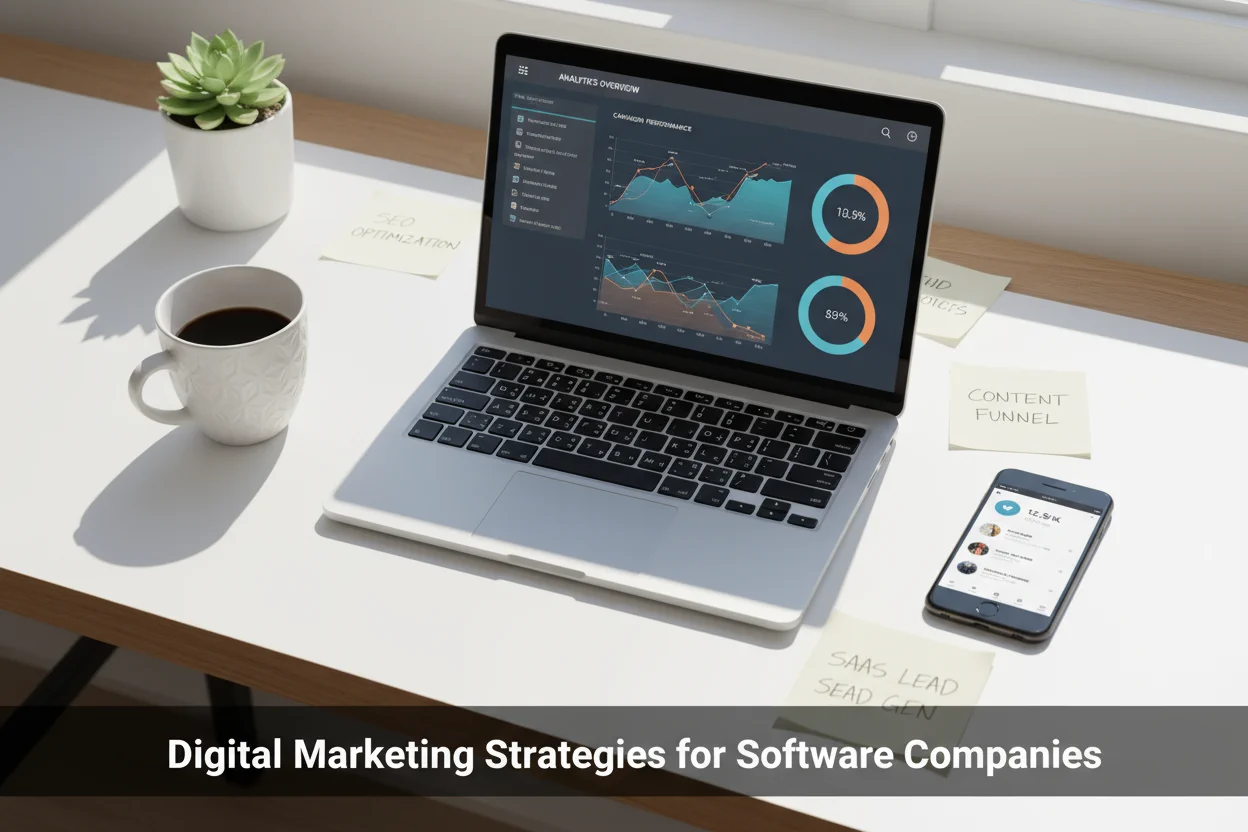
The advantage of digital marketing is measurability—you can track almost everything. Implement comprehensive analytics to understand what's working and what isn't. Track website traffic sources, conversion rates at each funnel stage, content engagement, email open and click rates, social media reach and engagement, and ultimately, marketing-attributed revenue.
However, avoid vanity metrics that look impressive but don't correlate with business goals. Focus on metrics that matter: qualified leads generated, lead-to-customer conversion rate, customer acquisition cost, lifetime value, and return on marketing investment. Use these insights to double down on effective channels and tactics while cutting underperformers.
Marketing Automation and CRM Integration
Marketing automation tools streamline repetitive tasks while enabling sophisticated multi-touch campaigns. Automatically score leads based on behavior, trigger relevant email sequences, personalize website content, and notify sales teams when prospects show buying signals. Integration with CRM systems ensures marketing and sales stay aligned with shared visibility into customer journey.
Start simple with basic automation workflows and grow sophistication over time. The goal is making marketing more efficient and personal, not replacing human connection with robotic sequences. Well-implemented automation feels helpful and timely to recipients while freeing marketers to focus on strategy and creativity.
Community Building and User-Generated Content
Building an engaged community around your product creates powerful organic marketing. Satisfied customers become advocates who share experiences, answer questions, and attract new users. Foster community through user forums, social media groups, customer advisory boards, and events—virtual or physical.
Encourage and showcase user-generated content: case studies, testimonials, reviews, tutorial videos, and integration examples. Authentic customer voices carry more weight than company marketing messages. Make it easy for satisfied customers to share experiences and amplify their content through your channels.
Measuring Marketing ROI
Ultimately, marketing success is measured by business impact. Calculate customer acquisition cost (CAC) across different channels and campaigns. Track customer lifetime value (LTV) to ensure acquisition costs are sustainable. Monitor how marketing contributes to pipeline generation and revenue. Set clear goals and regularly review performance against targets.
Remember that attribution can be complex—customers typically interact with multiple touchpoints before buying. Use multi-touch attribution models to credit various marketing activities appropriately. The first touchpoint that creates awareness and the last touchpoint before purchase both matter, as do all the nurturing touches in between.
DevsMotion's Integrated Marketing Approach
At DevsMotion, we help software companies build comprehensive digital marketing strategies that generate qualified leads and drive growth. Our approach combines technical expertise—understanding developer and IT audiences—with proven marketing tactics refined through years of experience in the software industry.
We work collaboratively with clients to understand their unique value propositions, identify target audiences, develop compelling messaging, and implement multi-channel campaigns. Whether you're launching a new product, entering new markets, or scaling existing marketing efforts, we provide the strategic guidance and execution support to achieve your growth objectives.