



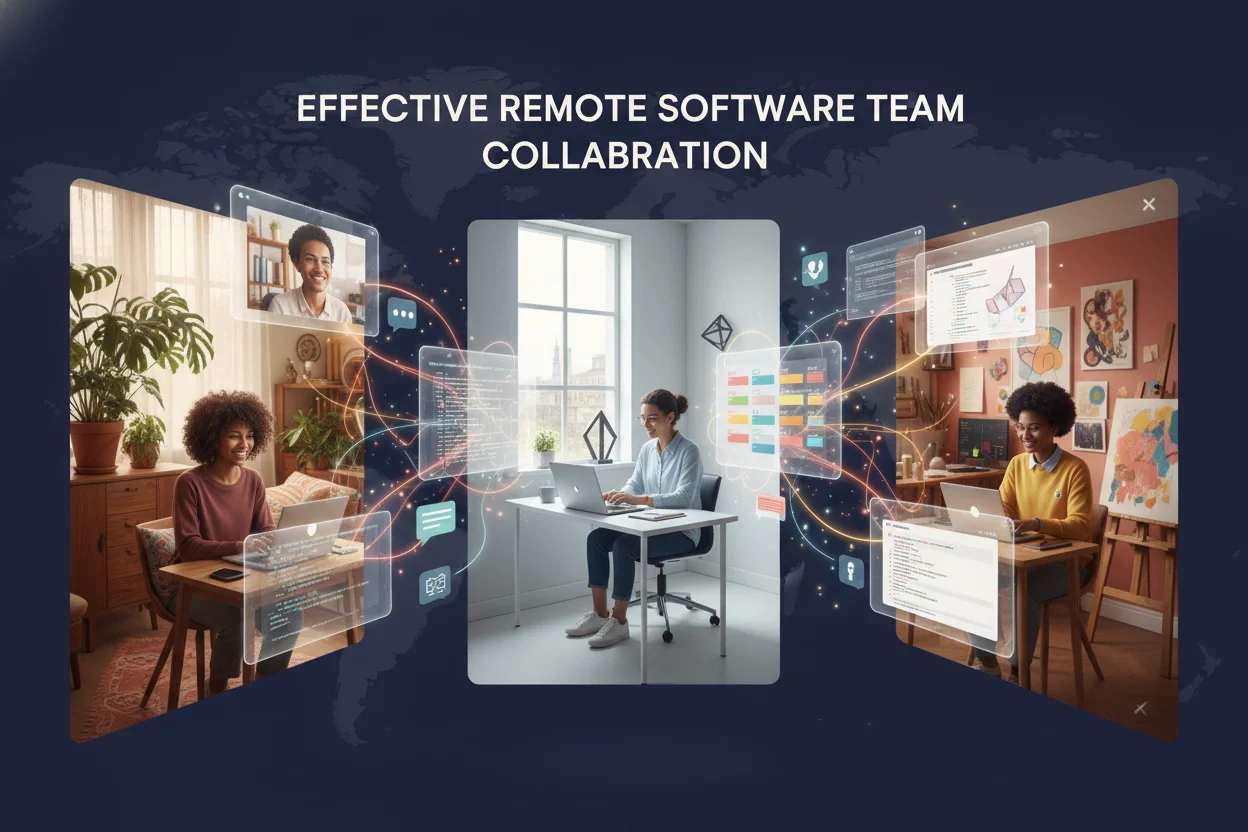
10 Tips for Effective Remote Software Teams
Remote software development has evolved from a temporary response to a pandemic into a permanent competitive advantage for companies worldwide. Teams that master remote collaboration can access global talent, operate with greater flexibility, and often outperform their co-located counterparts. However, success requires intentional strategies that address the unique challenges of distributed work.
The key to effective remote software teams isn't trying to replicate the office environment online—it's embracing new ways of working that leverage the unique advantages of remote collaboration while proactively managing its challenges. The following tips represent best practices from high-performing distributed teams across the industry.
1. Establish Clear Communication Protocols
Remote teams must be deliberate about communication in ways that co-located teams can take for granted. Define expectations for response times, preferred channels for different types of communication, and norms around synchronous versus asynchronous work. When should team members use Slack versus email? When is a video call necessary? Clear protocols eliminate confusion and keep everyone aligned.
2. Invest in the Right Tools and Infrastructure
Technology is the foundation of remote collaboration. Invest in reliable tools for video conferencing, project management, code collaboration, documentation, and team communication. Equally important is ensuring team members have proper equipment—quality monitors, webcams, microphones, and ergonomic furniture. The productivity gains and reduced fatigue far outweigh the costs.
3. Over-Communicate Context and Decisions
In co-located offices, team members absorb context through hallway conversations and spontaneous discussions. Remote teams must explicitly document decisions, share context proactively, and create systems for making information discoverable. Write down decisions, share meeting notes publicly, and maintain living documentation that evolves with your project.
4. Create Overlap in Working Hours
While remote work enables global teams, having some overlapping hours for real-time collaboration is valuable. Identify core hours when the whole team is available for meetings, pair programming, or quick synchronous problem-solving. Respect time zones and rotate inconvenient meeting times fairly among team members.
Remote work isn't about being alone—it's about being connected in new ways that respect focus time while enabling collaboration.
Remote Work Expert
5. Build Intentional Team Culture
Culture doesn't happen automatically in remote environments. Create regular opportunities for social connection—virtual coffee chats, online games, or informal video hangouts. Celebrate wins publicly, acknowledge contributions, and create traditions that give your team identity and cohesion. Small efforts compound into strong team bonds.
6. Focus on Outcomes, Not Activity
Measure success by what teams deliver, not how many hours they're online. Set clear goals and expectations, then trust team members to manage their time. This outcome-oriented approach reduces micromanagement anxiety while empowering team members to work when they're most productive.



7. Establish Effective Documentation Practices
Documentation becomes critical when you can't tap someone on the shoulder for quick answers. Maintain up-to-date README files, architecture decision records, API documentation, and onboarding guides. Treat documentation as a first-class deliverable, not an afterthought. Good documentation compounds value over time, making every new team member more productive faster.
8. Implement Regular Check-ins and Feedback
Regular one-on-ones, team retrospectives, and feedback sessions help surface issues before they become major problems. Create psychological safety where team members feel comfortable sharing challenges. Remote work can be isolating, so proactive check-ins ensure everyone feels supported and connected to team goals.
9. Respect Asynchronous Work Styles
Not everything needs to be synchronous. Embrace asynchronous communication for updates, code reviews, and non-urgent discussions. This respects deep focus time and accommodates different time zones. Use tools like pull request comments, video recordings, and detailed written updates to keep work flowing without constant meetings.
10. Prioritize Work-Life Balance
Remote work can blur boundaries between professional and personal life. Encourage team members to establish clear start and end times, take breaks, and truly disconnect after hours. Model healthy behavior from leadership. Burned-out teams can't sustain productivity, no matter how many productivity hacks they employ.
Building High-Performance Remote Teams
These practices aren't one-time implementations—they're ongoing commitments that require regular refinement. The most effective remote teams continuously experiment, gather feedback, and adapt their approaches. What works for one team may need adjustment for another, so remain flexible and responsive to your team's evolving needs.
At DevsMotion, our fully distributed team has refined these practices through years of remote collaboration. We've built successful projects for clients worldwide while maintaining strong team culture and exceptional productivity. Remote work isn't just possible—when done right, it's a competitive advantage that enables better work and better lives for everyone involved.